My consultant gave feedback on CFROST version 1. In this document we refine version 1 to address the criticisms.
The interior dimensions of the tank are 8 feet long by 5 feet wide… but a nice-but-not-necessary design goal would be for the pyramidal top to match the ratios of the pyramid of Giza.
Target water depth is 10 inches.
There is no explicit thermal stability target – whatever thermal stability is afforded by the materials is what we have go with (for now).
There are no noise reduction expectations – noise elimination is the job of room containing the tank.
CFROST Compliance Requirements
Must float an adult up to 300 lbs (the fatter a person, the easier they float. I haven no idea why chatgpt was concerned with this).
Must maintain water temperature within 2 deg F range for infinite hours
Must assemble using tools no more specialized than what the average person can use – ie, no advanced skills in sawing, varnishing, assembly, measuring.
Must be able to be disassembled without destroying components
Must avoid patented subsystems. Note well: Kirk Sullivan abandoned his efforts to patent the Float-ES tank.
The Hard Base
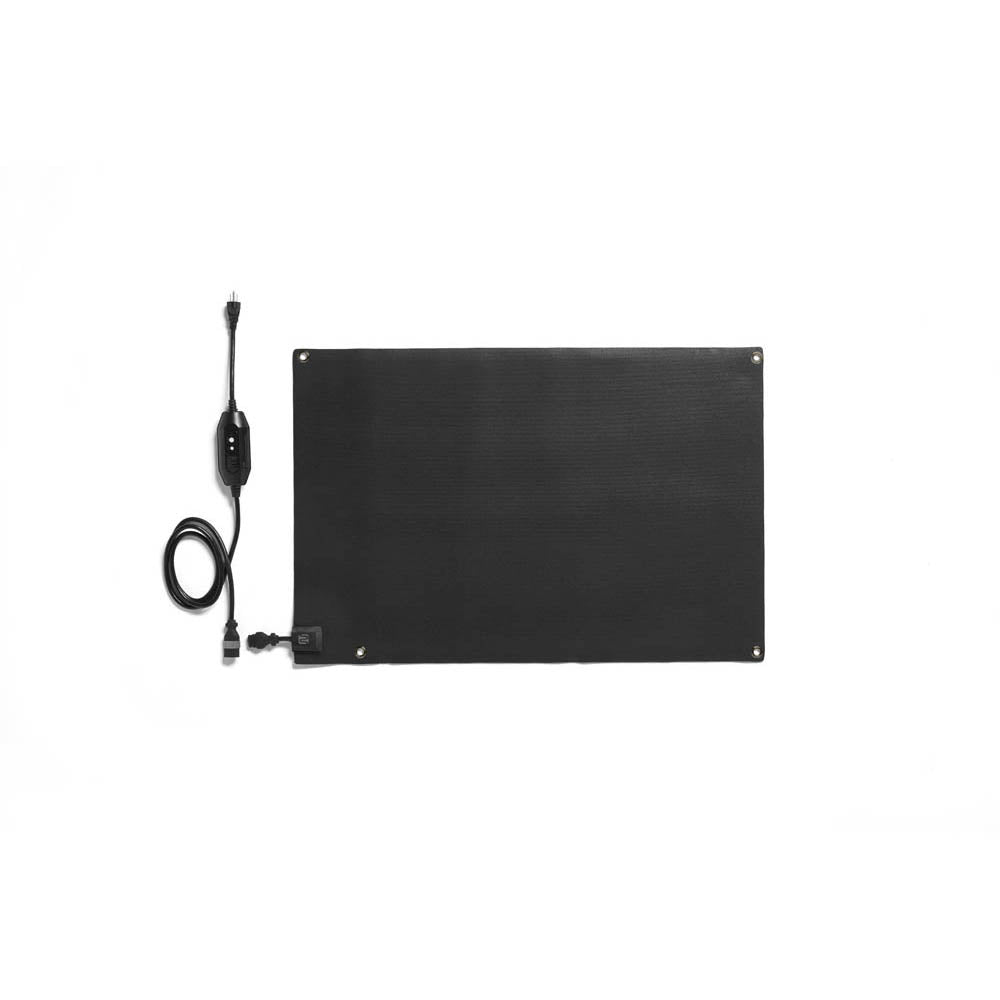
I’m not sure what material the hard base should be made of – the heat from the heating element inside the hard base (probably a snow melting mat, but a waterbed heater as a much-less-desired alternative) needs to transfer to the float tank water.
Heating element – mounting, removing and sealing
The hard base is envisoned to be something like an oven you can open the door, pop a pizza in there and then close the door. In this case, we want to open the door of the base, pop a snow melting mat in there and then close the door… we just need to accomodate for the cord of the snow melting mat to have an exit that does not leak the heat excessively.
Here is a picture of the snow melting mat
Load-bearing assumptions
the hard base (and the pool liner which forms the rectangular float tank) must deal with 1000 pounds of weight and the movement of a human on and off of them.
Condensation handling
There is no focus on condensation handling. Lilly came up with reasons that condensation was a useful synchronicity. My prayer is that the pyramidal top will allow condensation to run off the sides.
Acoustic treatment strategy, Light sealing method
this is the responsibility of the room the tent is housed in.
Venting without sensory intrusion and Air exchange rate
I have experienced sensations of suffering in the ragtop diy tank. This led to increasing the air space above the water-tank part of the float tent (it appears we have come up a synonym for what Kirk Sullivan called “float tank” … we call the part that holds epsom salt water a water tank and we can allow the term “float tank” to be a whole tank even though we are building a float tent here).
At any rate, I have no idea how to do this correctly.